
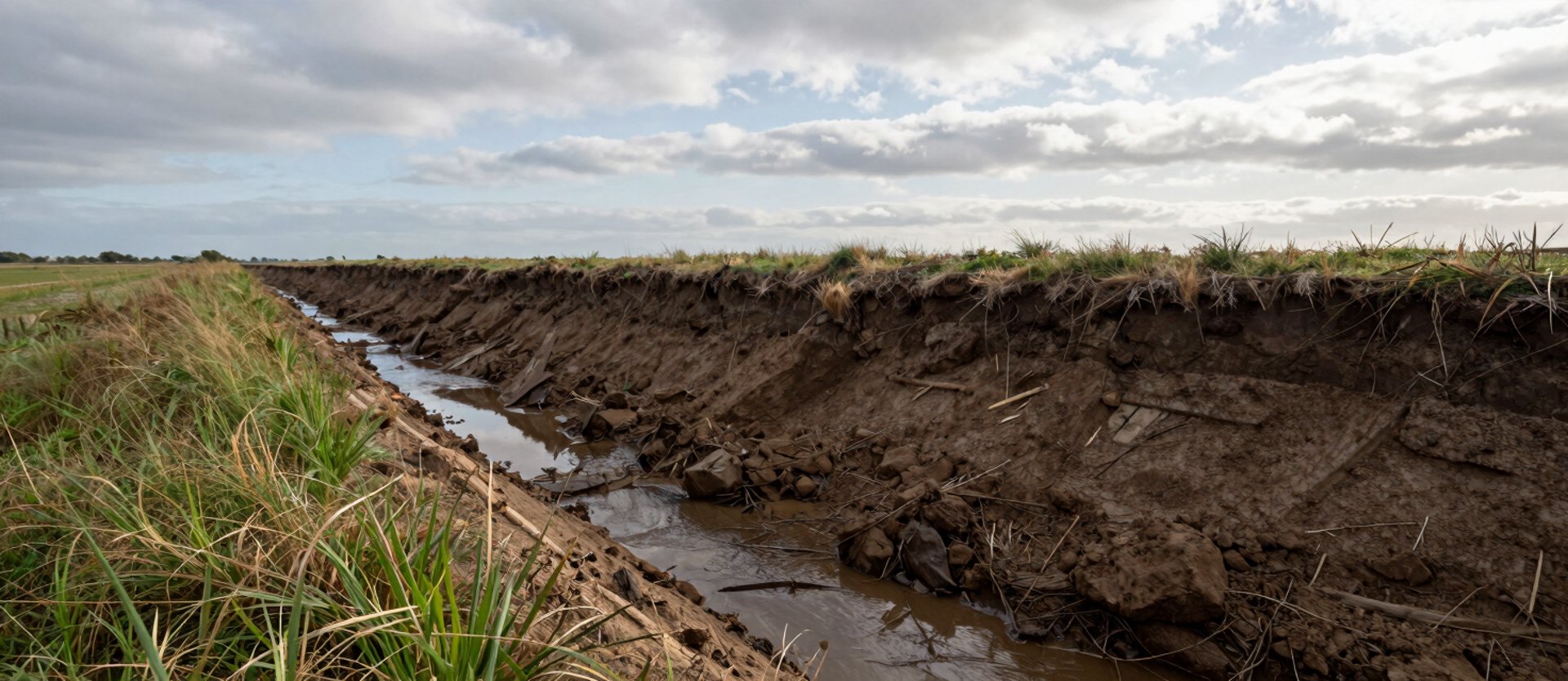
Stewardship begins before the first plan is drawn
Every engagement starts with what the land already holds — its water paths, soil horizons, and ecological memory — before any development scenario is considered.


Watershed and soil audit before anything else
We map existing drainage paths, groundwater recharge zones, and soil organic matter depth across the full parcel. This audit is the document every downstream decision references.
Where other developers start with a site plan, we start with a site reading. What the land already does well shapes what we propose — not the other way around.
Audit deliverables: soil horizon profiles, permeability ratings, native seed bank inventory, 100-year flood path documentation, and a water-budget baseline tied to regional rainfall data.
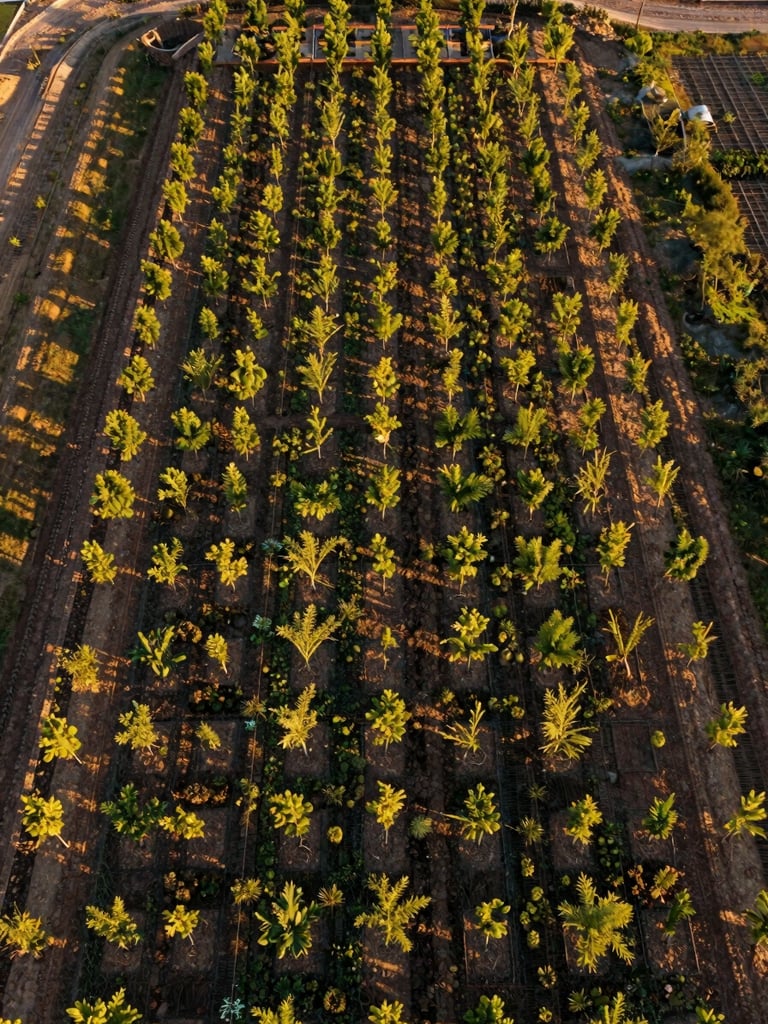
Every decision evaluated against fifty-year outcomes
Site density, material selection, and infrastructure routing are each stress-tested against ecological and community scenarios projected decades forward — not just the next sale cycle.
Multi-generational planning means the native plantings we specify today are chosen for canopy closure in thirty years. Drainage infrastructure is sized for rainfall patterns the next half-century is likely to deliver.
Stewardship written into the deed, not the brochure
Conservation easements, deed covenants, and recorded land-use restrictions convert our site planning into legal obligations that survive ownership transfer. Intentions are not enough; we make them enforceable.
Institutional partners and municipalities can verify these instruments before any commitment is made. The documents are the proof.